

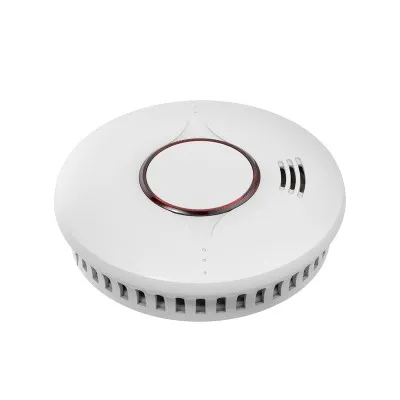




As a supplier of wireless smoke detectors, one of the most frequent questions I encounter from customers is about the proper installation height for these life - saving devices. Understanding the correct installation height is crucial for ensuring the optimal performance of wireless smoke detectors and, ultimately, the safety of the occupants in a building.


The Science Behind Smoke Movement
Before delving into the specific installation heights, it's important to understand how smoke behaves in a room. When a fire breaks out, hot smoke rises due to its lower density compared to the surrounding air. As it rises, it cools and begins to spread horizontally across the ceiling. Eventually, the smoke layer thickens and descends towards the floor.
The initial upward movement of smoke is rapid, driven by the buoyancy force created by the heat of the fire. Once it reaches the ceiling, it spreads out in a relatively thin layer. The rate of descent of the smoke layer depends on various factors such as the size of the fire, the ventilation in the room, and the volume of the space.
General Installation Guidelines
The general rule of thumb for installing wireless smoke detectors is to place them on the ceiling or high on the wall. The National Fire Protection Association (NFPA) in the United States recommends installing smoke detectors on the ceiling, at least 4 inches (10 cm) from the wall. If installing on the wall, the detector should be mounted between 4 and 12 inches (10 - 30 cm) from the ceiling.
The reason for these guidelines is that smoke rises and accumulates near the ceiling. By placing the detector in this area, it can quickly detect the presence of smoke and trigger an alarm. Mounting the detector too close to the wall on the ceiling can cause issues, as the smoke may be blocked by the wall and not reach the detector as efficiently. Similarly, if the detector is installed too low on the wall, it may not detect the smoke until it has already descended significantly, which could delay the alarm.
Considerations for Different Room Types
Bedrooms
In bedrooms, it is essential to have a smoke detector installed on the ceiling or high on the wall near the entrance. This location ensures that the detector can quickly detect any smoke that may enter the room from a fire in another part of the house. Additionally, having the detector near the entrance allows for a more effective wake - up call in case of an emergency.
Living Rooms and Open Areas
For living rooms and other open areas, the smoke detector should be installed in the center of the ceiling. This provides the best coverage as it can detect smoke from all directions. If the room has a high ceiling (more than 10 feet or 3 meters), it may be necessary to install additional detectors at lower heights to ensure that smoke is detected before it spreads too far.
Kitchens
Kitchens present a unique challenge when it comes to smoke detector installation. The normal cooking activities in the kitchen can produce steam and smoke that may trigger false alarms. To avoid this, smoke detectors should be installed at least 10 feet (3 meters) away from the cooking area. If this is not possible, a photoelectric smoke detector is recommended, as it is less likely to be triggered by cooking steam compared to an ionization smoke detector.
Specialized Wireless Smoke Detectors and Their Installation
There are various types of wireless smoke detectors available in the market, each with its own features and installation requirements.
The Nb Iot Wireless Smoke Detector Strobe is a specialized device that not only detects smoke but also has a strobe light to provide a visual alarm. This can be particularly useful for people with hearing impairments. The installation height for this type of detector follows the general guidelines mentioned above. However, the strobe light should be positioned in such a way that it is visible from different parts of the room.
The Wireless Fire Alarm System is designed to provide a comprehensive fire - detection solution for larger buildings. These systems often consist of multiple interconnected smoke detectors. When installing a wireless fire alarm system, it is important to ensure that all the detectors are installed at the correct height and are properly interconnected. This allows for a coordinated response in case of a fire, with all the detectors sounding an alarm simultaneously.
The Wireless Connected Smoke Detectors are another option for homes and small buildings. These detectors can communicate with each other wirelessly, which means that if one detector detects smoke, all the connected detectors will sound an alarm. The installation height for these detectors is also based on the general guidelines, but proper spacing between the detectors is crucial to ensure effective communication.
Factors Affecting Installation Height
Ceiling Type
The type of ceiling can also affect the installation height of wireless smoke detectors. For example, in a sloped ceiling, the detector should be installed within 3 feet (0.9 meters) of the highest point of the ceiling. This ensures that the detector is in the area where the smoke is most likely to accumulate.
In a dropped ceiling, the detector should be installed on the main ceiling above the dropped ceiling. This is because the dropped ceiling can act as a barrier to smoke movement, and installing the detector below the dropped ceiling may result in delayed detection.
Ventilation
The ventilation in a room can have a significant impact on smoke movement. In a well - ventilated room, the smoke may be dispersed more quickly, which means that the detector may need to be installed closer to the source of the fire. On the other hand, in a poorly ventilated room, the smoke may accumulate more slowly, but it may also be more concentrated near the ceiling.
Importance of Correct Installation
Installing wireless smoke detectors at the correct height is not just a matter of following guidelines; it is a matter of life and death. A detector installed too low may not detect the smoke in time, allowing a fire to spread and potentially causing serious harm to the occupants. Conversely, a detector installed too high or in an improper location may not function correctly or may give false alarms.
Proper installation also ensures that the detector can communicate effectively with other devices in a wireless system. If the detector is not installed correctly, it may not be able to send or receive signals, which can compromise the entire fire - detection system.
Conclusion
In conclusion, the installation height for wireless smoke detectors is a critical factor in ensuring their effectiveness. By following the general guidelines and considering the specific characteristics of the room, such as its type, ceiling type, and ventilation, you can ensure that your wireless smoke detectors provide the best possible protection.
If you are interested in purchasing high - quality wireless smoke detectors or have any questions about installation, we are here to help. Our team of experts can provide you with detailed information and guidance to ensure that you make the right choice for your safety needs. Contact us to start a procurement discussion and take the first step towards a safer environment.
References
- National Fire Protection Association (NFPA). NFPA 72: National Fire Alarm and Signaling Code.
- International Building Code (IBC).
- Local building and fire safety codes.


