

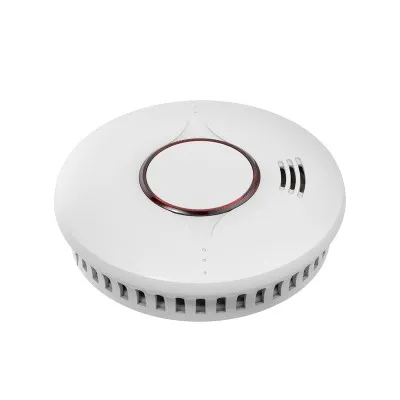




When it comes to safeguarding your home and loved ones, installing a hardwired smoke detector is a crucial step. As a leading supplier of high - quality hardwired smoke detectors, I understand the importance of proper placement. In this blog, I'll share some scientific and practical guidelines on where to place hardwired smoke detectors in your house.
1. The Basics of Smoke Detector Placement
Smoke detectors work by sensing the presence of smoke particles in the air. To ensure their effectiveness, they need to be placed in areas where smoke is likely to travel. The general principle is to install them on the ceiling or high on the wall, as smoke rises.
2. Placement in Bedrooms
Bedrooms are one of the most critical areas to have a smoke detector. People are often asleep in bedrooms, and early detection can be a matter of life and death. Install a hardwired smoke detector on the ceiling in the middle of the bedroom. If the ceiling installation is not possible, place it on the wall at least 4 - 12 inches below the ceiling. This position allows the detector to quickly sense any smoke that might be generated from a fire in the room.


3. Hallways
Hallways are the main routes for smoke to travel throughout the house. Install a smoke detector in the middle of each hallway on the ceiling. If your house has multiple levels, make sure there is a detector on each floor's hallway. This way, if a fire starts in one part of the house, the smoke will trigger the detector in the hallway, alerting everyone in the house.
4. Living Areas
Living rooms, family rooms, and other common living areas should also have smoke detectors. Place them on the ceiling in the center of the room. These areas are often where people gather, and having a detector here can provide early warning in case of a fire. For larger living areas, consider installing multiple detectors to ensure comprehensive coverage.
5. Kitchen
The kitchen is a high - risk area for fires due to cooking activities. However, placing a smoke detector directly in the kitchen can lead to false alarms from normal cooking smoke. Instead, install a detector outside the kitchen, in the hallway leading to it. This way, it can still detect smoke from a kitchen fire but is less likely to be triggered by everyday cooking.
6. Basements
Basements are often overlooked but can be a source of fires, especially if there are electrical appliances or stored flammable materials. Install a smoke detector on the ceiling of the basement. If the basement has multiple rooms, consider placing a detector in each room or at least in the main areas.
7. Attics
Attics can also be a fire hazard, especially if there are insulation materials or electrical wiring. Install a smoke detector on the ceiling of the attic. Make sure it is easily accessible for maintenance and testing.
8. Inter - Linked Smoke Detectors
Inter - linked smoke detectors are a great option for enhanced safety. When one detector senses smoke, all the detectors in the house will go off. This ensures that everyone in the house is alerted, regardless of where the fire starts. We offer Inter Linked Fire Alarms, which are easy to install and provide reliable protection.
9. Considerations for Different House Layouts
- Open - Concept Homes: In open - concept homes, where there are fewer walls and partitions, place smoke detectors at strategic points to cover the entire living space. For example, if the living room, dining room, and kitchen are all part of one large area, install detectors at different corners and in the center of the space.
- Multi - Story Homes: In addition to having detectors on each floor's hallway, consider installing detectors on the stairs. This can help detect smoke as it travels between floors.
10. Special Features of Our Hardwired Smoke Detectors
Our BSI Hardwired Smoke Detector is designed with advanced technology to provide accurate and reliable smoke detection. It has a long - lasting battery backup, ensuring that it continues to function even during a power outage. The 220V Smoke Alarm With Battery is another great option, offering dual - power capabilities for added peace of mind.
11. Maintenance and Testing
Proper placement is only part of the equation. Regular maintenance and testing of your smoke detectors are essential. Test your detectors at least once a month to ensure they are working properly. Replace the batteries (if applicable) and clean the detectors regularly to prevent dust and debris from interfering with their operation.
12. Conclusion
Proper placement of hardwired smoke detectors is crucial for the safety of your home and family. By following these guidelines, you can ensure that your smoke detectors are installed in the most effective locations. As a supplier of high - quality hardwired smoke detectors, we are committed to providing you with the best products and support. If you have any questions about smoke detector placement or are interested in purchasing our products, please feel free to contact us for a procurement discussion.
References
- National Fire Protection Association (NFPA). NFPA 72: National Fire Alarm and Signaling Code.
- Underwriters Laboratories (UL). UL 217: Standard for Smoke Detectors.


